
Site Evaluation and Written Estimate
We check soil conditions, existing slope, drainage paths, and slab thickness needs, then provide a clear written estimate before any work begins.
New concrete driveways and full replacements serve Buckeye homeowners whose cracked, sinking, or outgrown slabs no longer handle daily traffic. Expansive desert soils and summer heat stress concrete fast. We start with compacted aggregate base prep, then place properly spaced control joints so the slab moves without random cracking. Our 2026 schedule favors cooler morning pours, and Concrete Contractors of Buckeye handles every step from layout to final broom finish.
CALL US AT 623-244-7374Send us your details and we’ll get back to you to schedule a time to talk.
Related Concrete Services
Driveways Built to Last
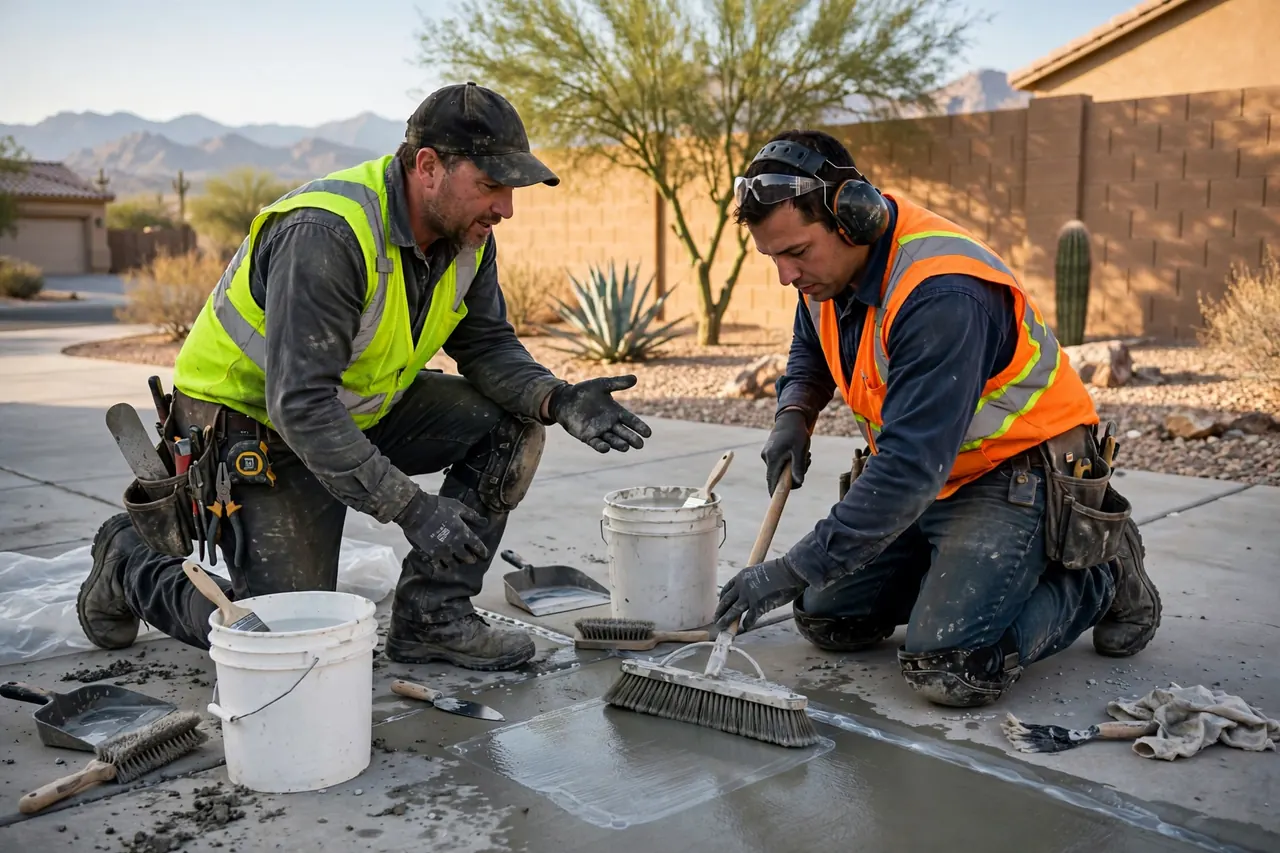
Concrete driveway installation is the process of excavating, grading, forming, and pouring a reinforced slab that carries vehicles from the street to a garage or parking area, and at Concrete Contractors of Buckeye it includes tear-out, base prep, placement, finishing, and curing across Buckeye properties. Every project begins with removing the old surface and checking subgrade compaction, since soft or unevenly settled soil is the root cause of most early failures. From there, we set forms for proper slope and drainage, add rebar or wire mesh reinforcement where loads call for it, and pour a mix suited to Arizona temperatures. Timing matters. In 2026 we continue scheduling early-morning pours during the hot months and applying curing compound right after finishing, which slows moisture loss and helps the slab reach full strength. Single-family homes, rental properties, multi-unit communities, and commercial entrances all get the same attention to joint layout, edge thickening, and broom or decorative finishes. Before we leave, a post-job walkthrough covers sealing schedules and simple preventative care so your driveway keeps its structural integrity and curb appeal for many years in the Buckeye climate.
Call Us On: 623-244-7374Concrete driveway pricing in Buckeye depends primarily on square footage, slab thickness, site prep needs, and finish choice, with most 2026 jobs priced after a quick on-site measurement. Size drives material volume, measured in cubic yards of concrete, while a thicker slab or added rebar reinforcement raises cost but greatly improves load capacity and lifespan. Tear-out matters too. Removing and hauling an old driveway, plus regrading and compacting the subgrade, can be a significant part of the budget on older Buckeye properties.
Finish selection also shapes the final number, since a standard broom finish costs less than stamped, colored, or exposed aggregate surfaces. Access, slope corrections, drainage adjustments, and any required city permit can affect labor time as well. Every site is different. That is why we measure in person and provide free written estimates that itemize each factor, so you can plan a driveway investment built for long-term durability.
Driveway Pricing for Buckeye Homes
Free written estimates with every cost factor clearly listed
Signs Your Driveway Needs Help
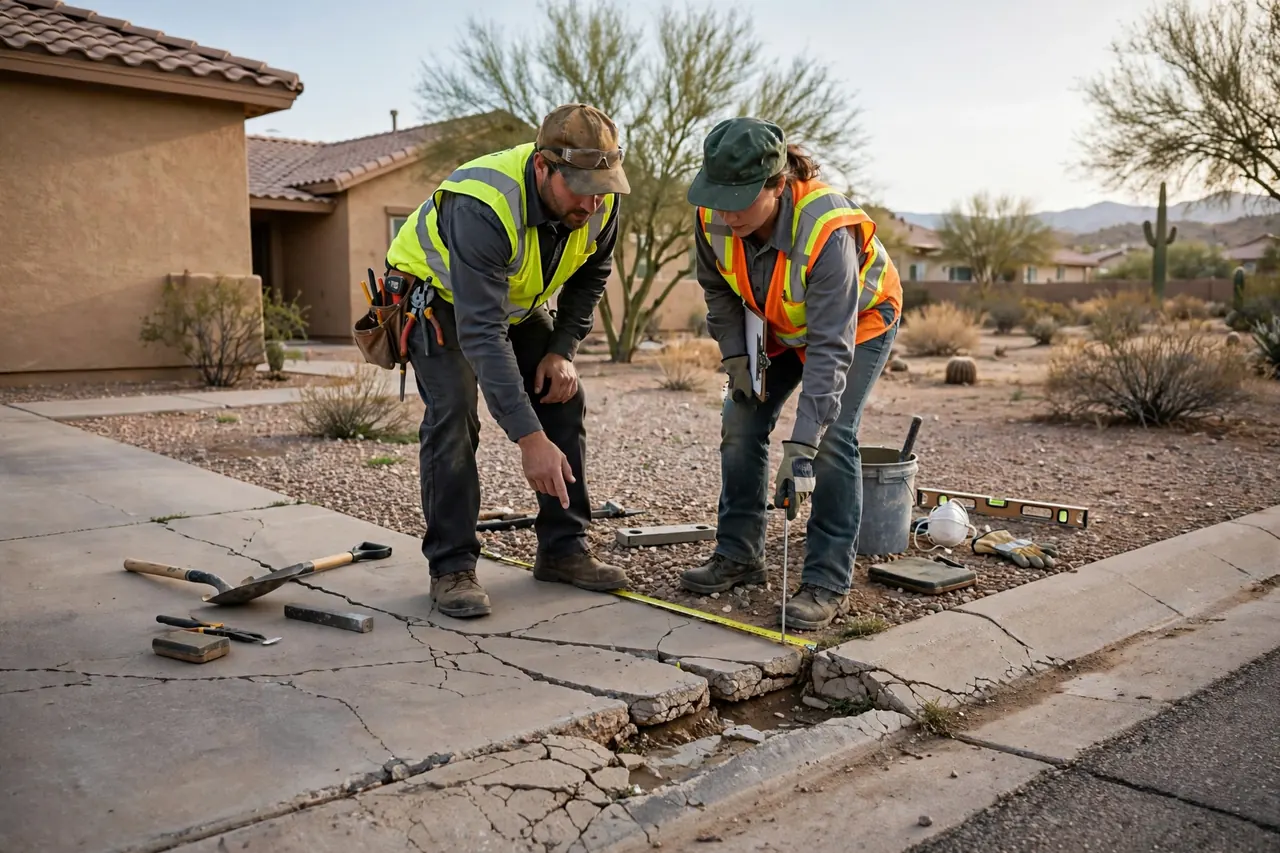
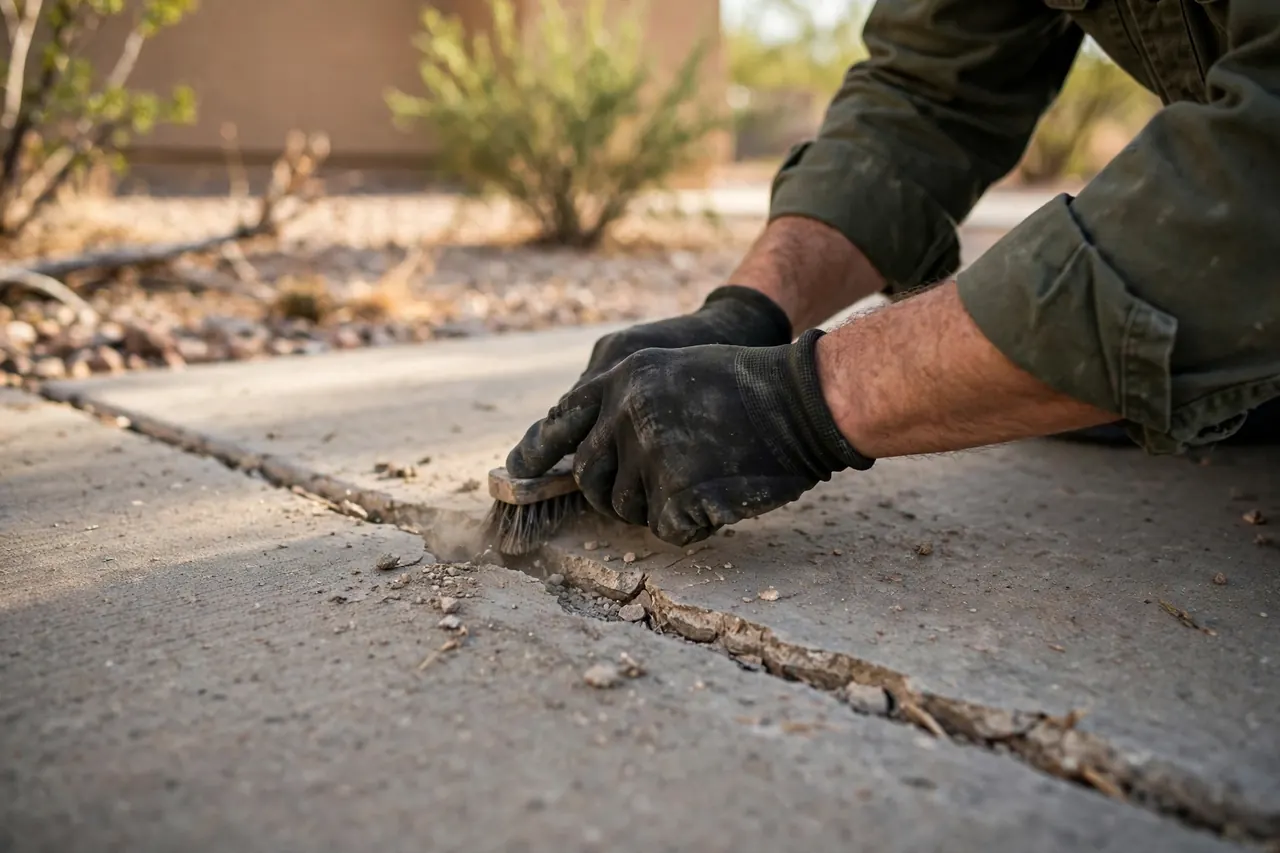
A Buckeye property usually needs a new concrete driveway when cracking, settling, spalling, or drainage problems start spreading faster than patching can keep up. Many homeowners first notice wide shrinkage cracks running across the slab, often worsened by the extreme heat cycles we see each summer. Others spot heaving or sunken panels where expansive clay soil and a poorly compacted subgrade have shifted beneath the concrete. Surface scaling and exposed aggregate are common too. Ponding water near the garage after monsoon storms usually points to an improper slope or failed control joints.
Heading into 2026, many driveways in older Buckeye neighborhoods are reaching the point where repeated sealing no longer protects the slab underneath. Small problems grow. A properly planned concrete driveway replacement addresses the root causes, from base preparation and rebar reinforcement to correct joint spacing and drainage grading. The result is a surface built to hold up for years, protect your curb appeal, and reduce the ongoing wear that leads to costly repairs down the road.
How We Build Driveways
We check soil conditions, existing slope, drainage paths, and slab thickness needs, then provide a clear written estimate before any work begins.
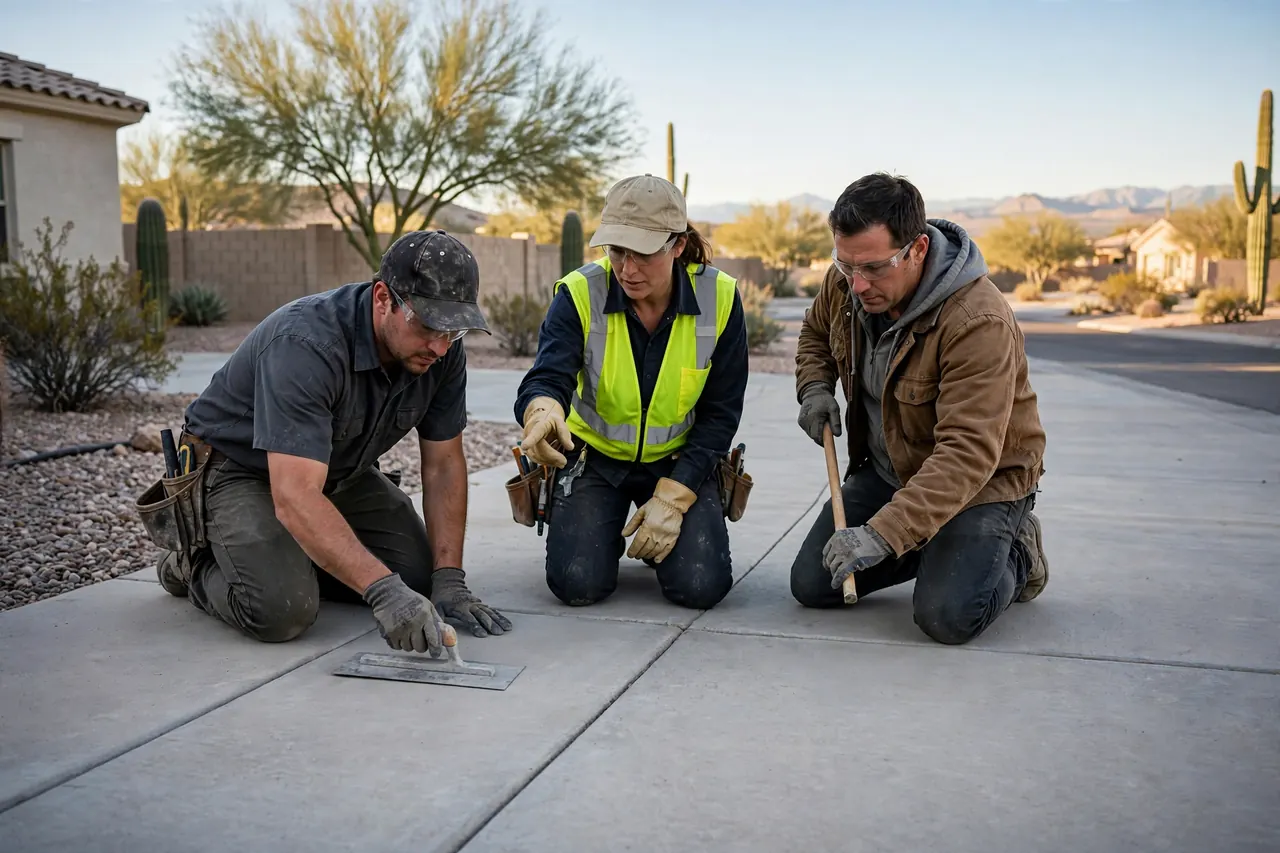
We remove old concrete, compact the aggregate base, set forms for proper pitch, and place rebar or wire mesh to support long-term structural integrity.
We pour during cooler hours, finish with a broom texture, cut control joints, manage curing, and close with a post-job walkthrough and care tips.
Throughout 2026, we have poured driveways for new homes, older ranch properties, and growing Buckeye families needing extra parking. Each site brings different soil and slope conditions.
Every job starts with proper subgrade compaction, rebar reinforcement, and well-placed control joints. We pour during cooler hours and manage curing closely to limit shrinkage cracks.
The goal is simple. Build a driveway that resists heat, monsoon runoff, and daily wear for years, backed by a written estimate and a post-job walkthrough.
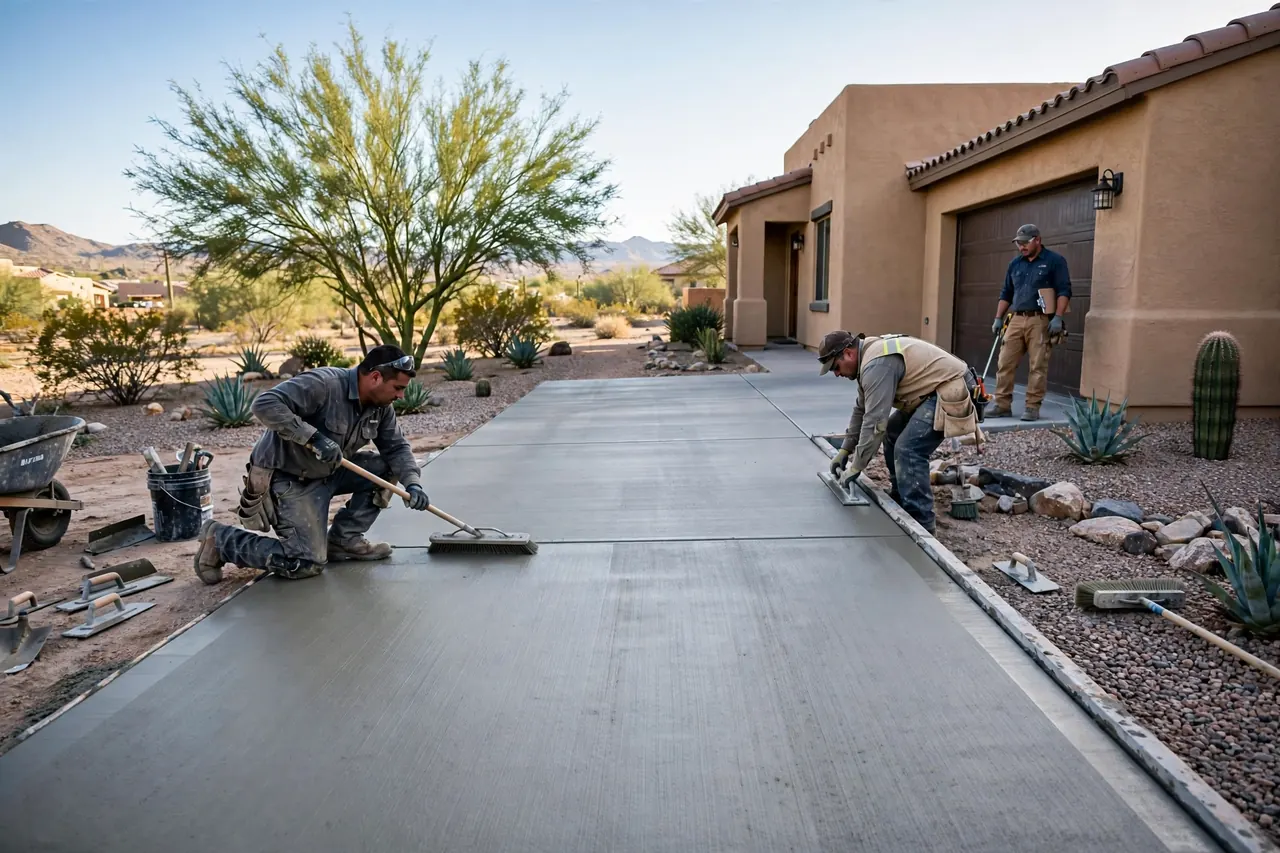
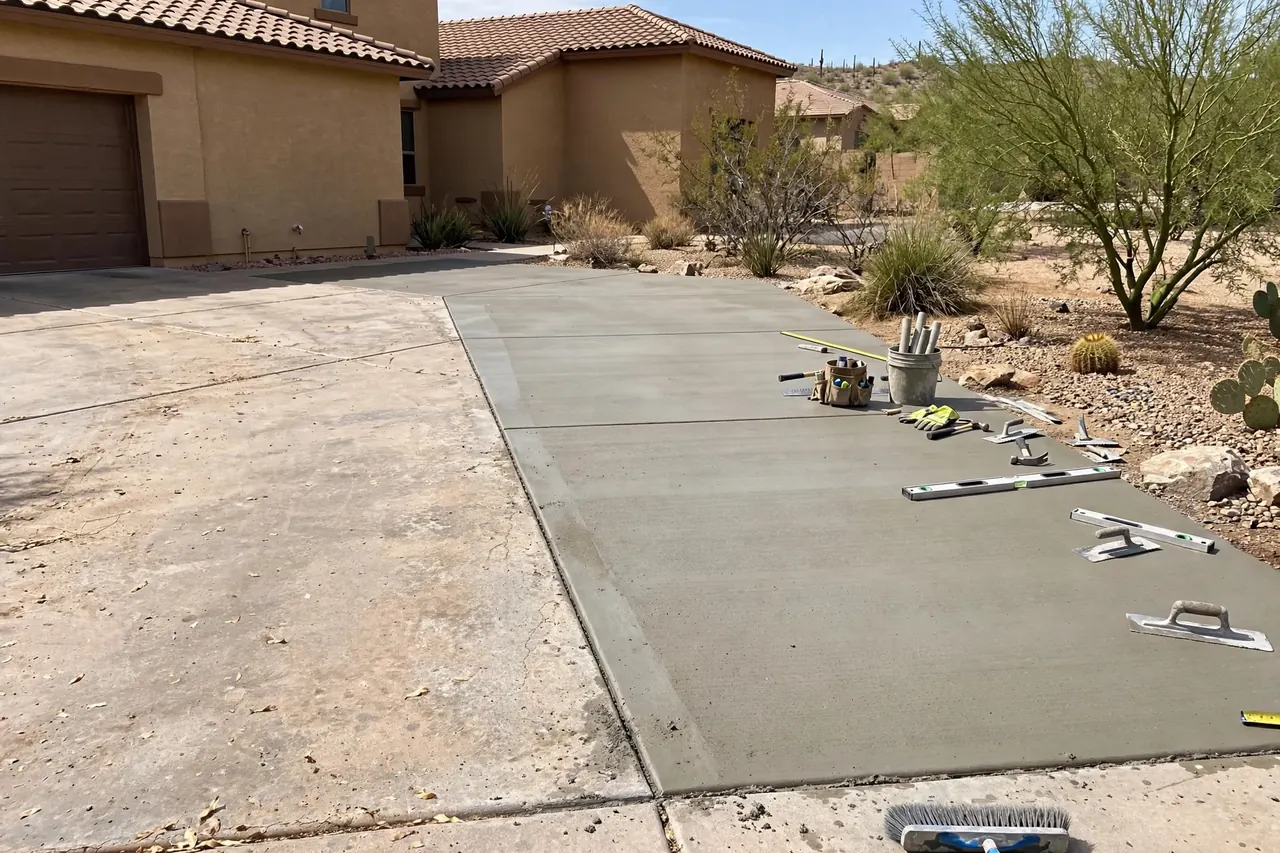
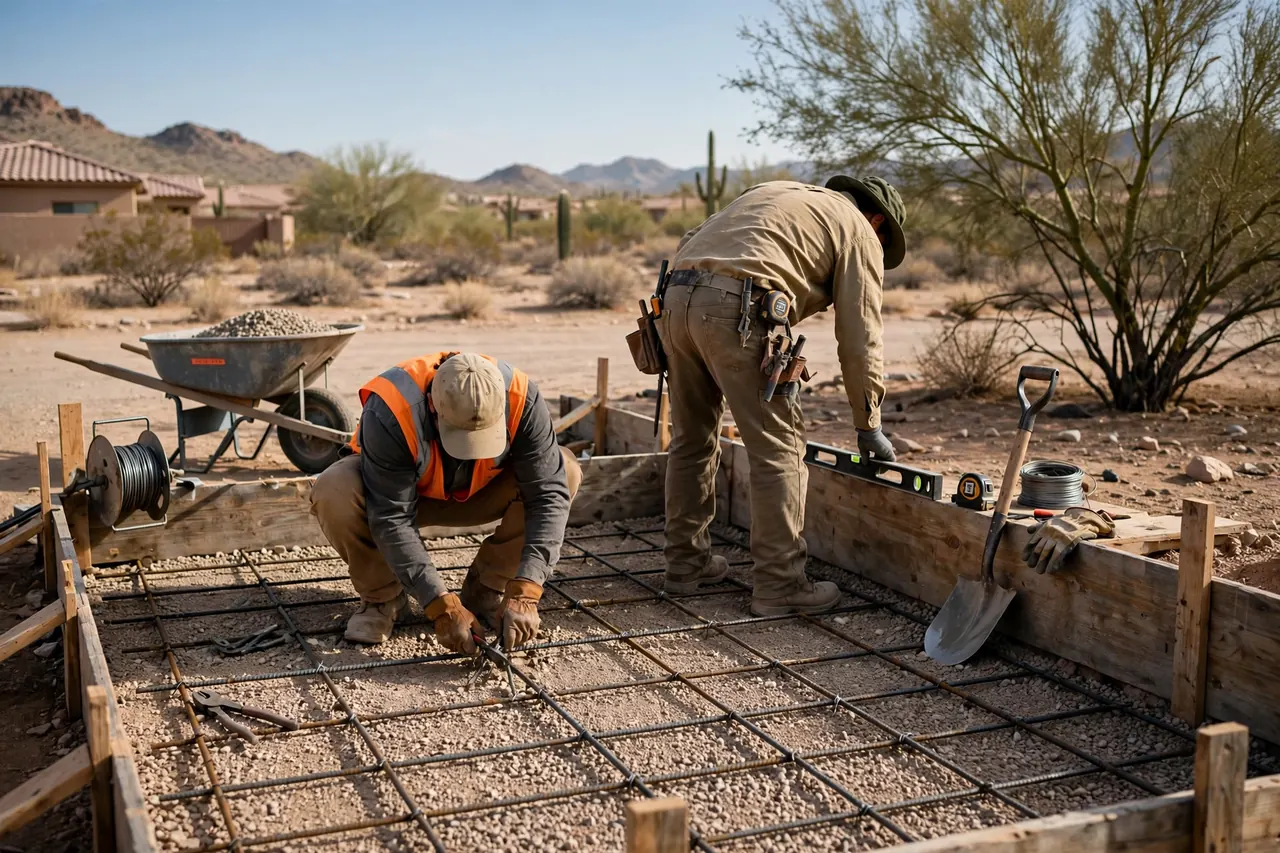
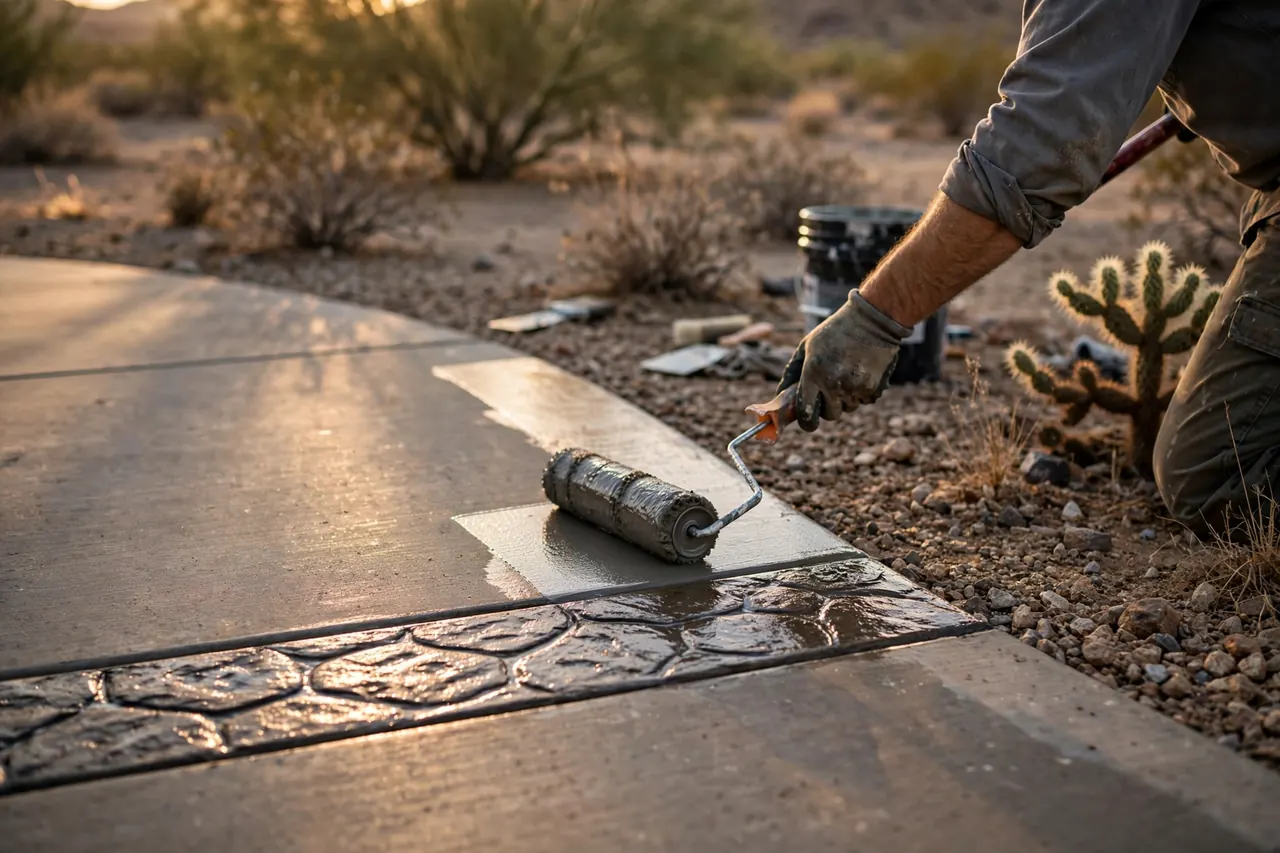
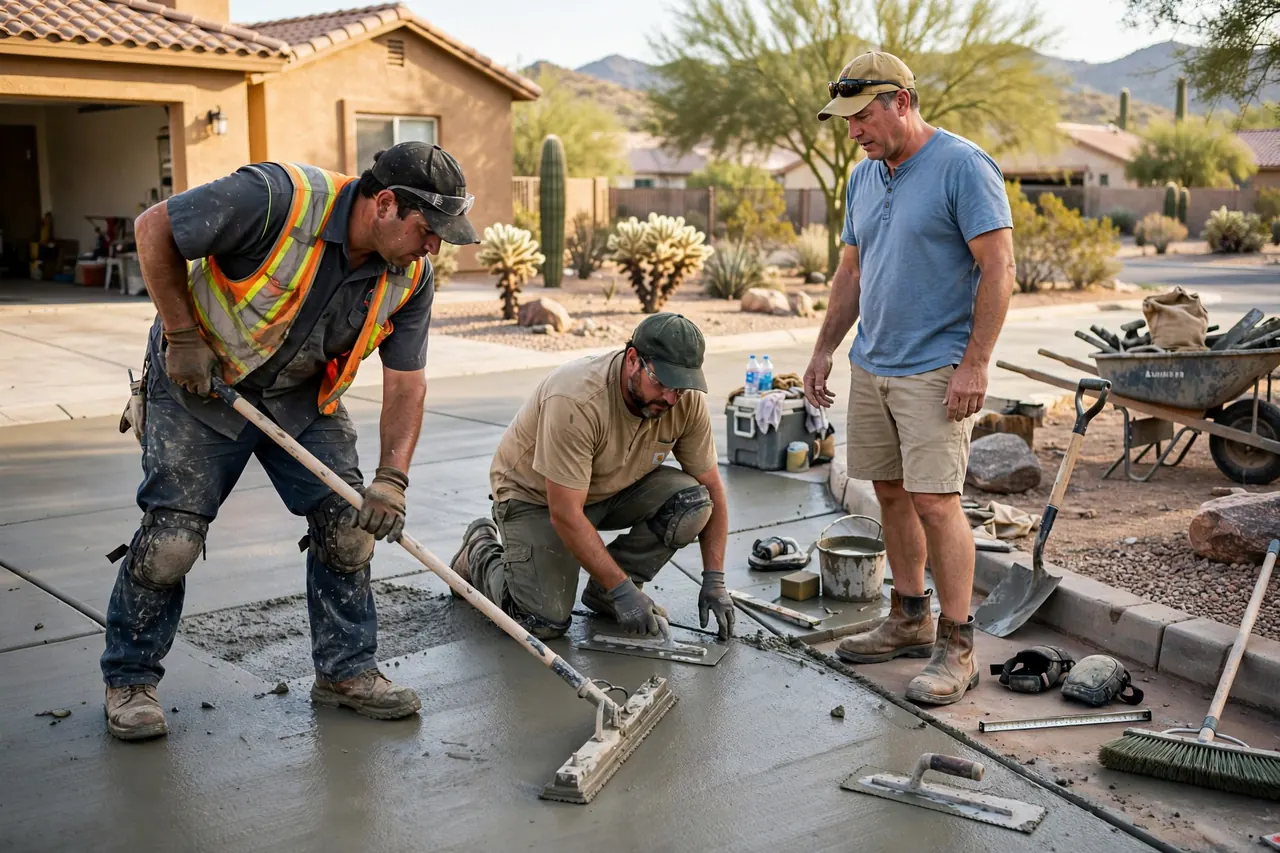
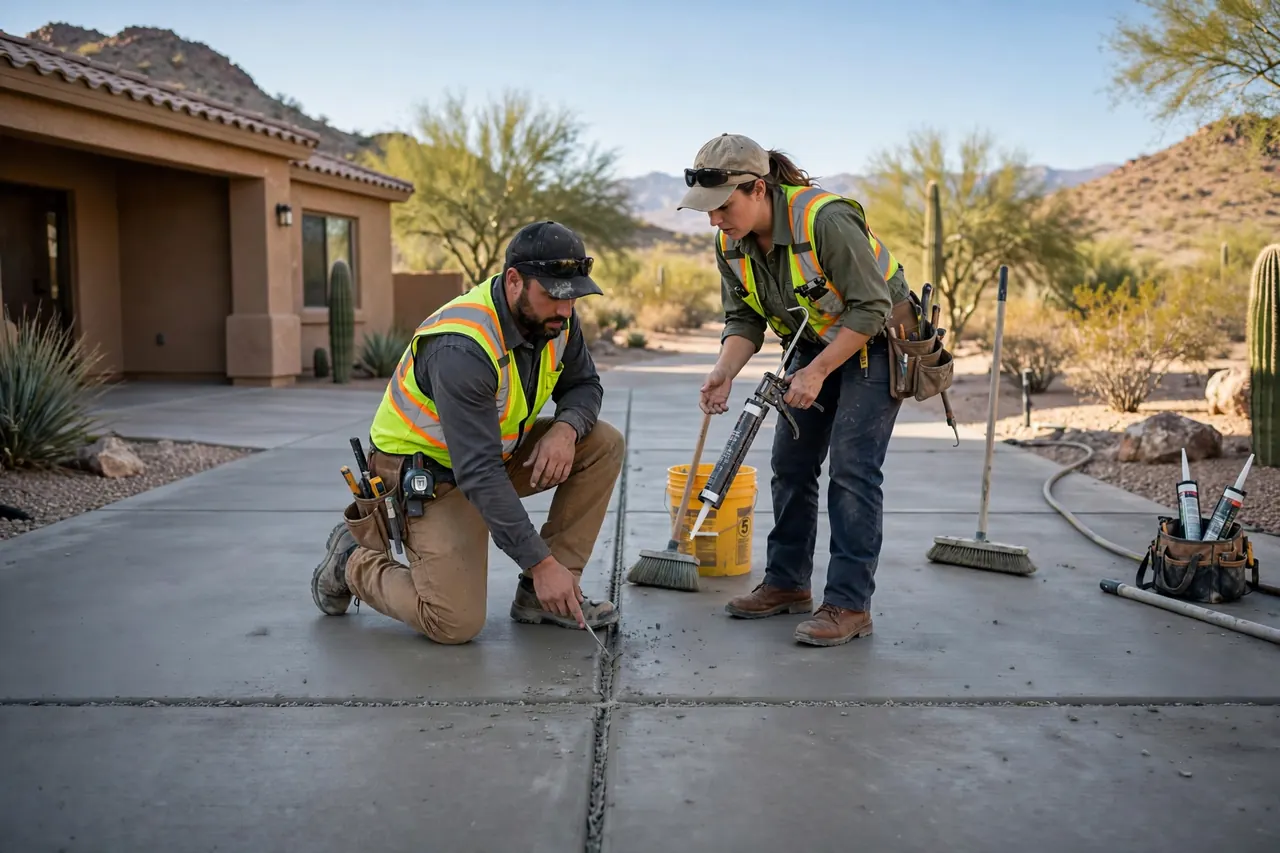
Buckeye homeowners trust Concrete Contractors of Buckeye for concrete driveways because every pour starts with compacted subgrade preparation, proper reinforcement, and control joints planned for the West Valley’s heat cycles. We look at soil conditions, drainage slope, and vehicle loads before setting forms, since those decisions shape how a driveway holds up years down the road. Each project begins with a written estimate that spells out slab thickness, rebar or wire mesh placement, and finish options. No guesswork. That groundwork matters in neighborhoods across Buckeye, where expansive soils and summer temperatures can lead to cracking and settling on driveways that were rushed.
Throughout 2026, our crews keep a steady routine on every driveway job, from timing the pour around Buckeye’s afternoon heat to applying curing compound so the surface strengthens evenly. We take photo documentation of base compaction and reinforcement before concrete goes down, which gives homeowners a clear record of the work underneath the finished surface. After the broom finish or decorative texture is complete, we hold a post-job walkthrough to go over curing time, when it’s safe to park, and sealing recommendations. Scheduled follow-ups help us check joints and surface condition once the slab has settled into its first season. Small steps add up. That preventative approach helps protect structural integrity and keeps your driveway performing well for the long haul.
Concrete Driveways FAQs
Planning a new driveway or replacing a worn one brings up plenty of questions. This section covers the concrete driveway topics Buckeye homeowners ask us about most in 2026, from scheduling and site prep to cost factors and curing.
Every property is a little different, so these answers are a starting point. For details specific to your home, a written estimate and an on-site look at your soil, slope, and existing slab will give you the clearest picture.
Fall, winter, and spring are usually the easiest seasons to pour a concrete driveway in Buckeye because milder temperatures allow for more even curing. Summer pours are still possible, but we schedule them for early morning and use curing compound and moisture control to prevent rapid drying and surface cracking. We will talk through timing options when we prepare your 2026 project schedule.
A typical concrete driveway installation includes removal of the old surface if needed, subgrade grading and compaction, forming, reinforcement, the concrete pour, finishing, and control joint placement. We also apply a curing compound and walk you through care instructions during a post-job walkthrough. Your written estimate lists each step so you know exactly what’s covered.
Homeowners mainly need to move vehicles, trash bins, and anything stored along the driveway before work begins. Clearing access lets our crew set forms and bring in equipment for base compaction without delays. If you live in an HOA community, it also helps to check whether any design approvals are needed ahead of time.
The cost of a concrete driveway depends on square footage, slab thickness, reinforcement type, demolition needs, and finish choices such as broom, exposed aggregate, or stamped concrete. Site conditions like grading and drainage corrections can also affect the total. We provide a written estimate after measuring and inspecting your property so the price reflects your actual project.
Buckeye’s expansive clay soils and intense summer heat can cause shifting, cracking, and early wear if a driveway isn’t built with proper base preparation and joint spacing. We compact the subgrade, plan control joints to manage thermal movement, and recommend periodic sealing to protect the surface from UV exposure. These steps help your driveway hold its condition through many West Valley summers.
Free Concrete Driveways Estimates
Ready for a driveway that holds up to Buckeye summers for years to come? Our crew will visit your property, check the soil, drainage, and slope, and walk you through base compaction, rebar reinforcement, and control joint placement before any work begins. You’ll receive a free written estimate with no obligation, so you can plan your 2026 project with clear numbers and no pressure. Scheduling is fast and simple. Whether you’re replacing a cracked slab in an established neighborhood or pouring new concrete at a recently built home, we focus on workmanship that protects your driveway’s structural integrity over the long haul. Reach out today and let’s get your Buckeye driveway project on the calendar.
Call Us On: 623-244-7374